
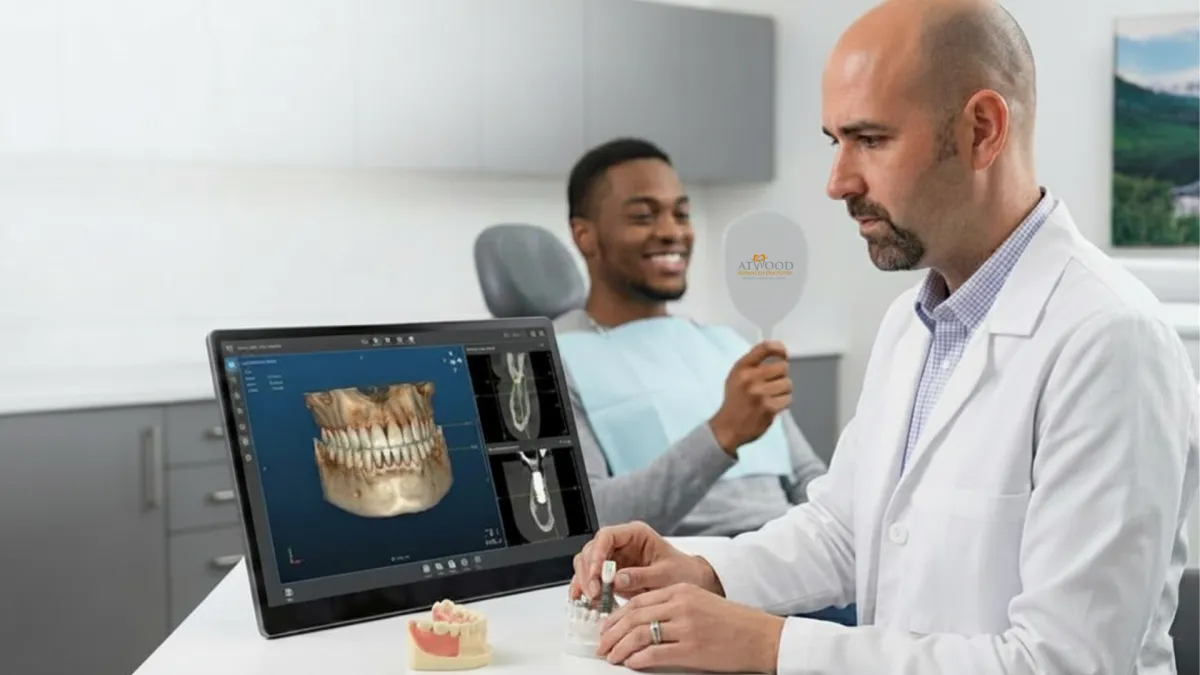
PRECISION OVER SPEED.
IMPLANTS THAT LAST.
THE WESTERN SLOPE'S SPECIALIST FOR DENTAL IMPLANTS
Done Right the First Time By a Certified Prosthodontist.
PRECISION OVER SPEED.
IMPLANTS THAT LAST.
WESTERN SLOPE'S SPECIALIST
FOR DENTAL IMPLANTS
Done Right the First Time
By a Certified Prosthodontist
Precision Over Speed in Restorative Dentistry
Why Expert Planning Protects Your Smile. In restorative dentistry, speed is not the same as success. A healthy, functional smile depends on far more than just replacing visible teeth.
Request a ConsultationA Smile Is a Biologic and Mechanical System
Dentures, dental implants, crowns, bridges, and full-mouth restorations must be designed around bone quality, gum health, jaw position, bite forces, speech, facial support, esthetics, hygiene access, and long-term maintenance. When treatment is rushed, the result may look impressive on the day it is delivered but become uncomfortable, unstable, difficult to clean, or prone to complications over time.
Restorative dentistry must work in harmony with living tissues and functional forces. A denture must have proper retention, stability, bite relationship, and vertical dimension. A dental implant must be placed in adequate bone, restored with the correct emergence profile, and loaded in a way that does not jeopardize healing. A full-mouth restoration must distribute chewing forces evenly and allow the patient to clean around the teeth or implants.
Research on complete denture quality identifies retention, stability, occlusion, articulation, and vertical dimension as major clinical parameters. In other words, the details that take time to measure and refine are the exact same details that influence your comfort, chewing efficiency, speech, and overall satisfaction.
Why “A New Smile in a Day” Is Not Always the Best Option
Same-day treatment is sometimes clinically appropriate, but the phrase can be misleading. A “new smile in a day” may sound appealing, especially for patients who are embarrassed by missing or failing teeth. However, these treatments are not ideal for every patient, and they should never replace a careful diagnosis and comprehensive treatment plan.
Immediate dentures are often inserted the same day remaining teeth are removed, but the denture will typically need to be relined or remade after the jaw has fully healed. Conventional dentures are placed after tissues have healed, which can take several months to ensure a perfect, stable fit.
Implant dentistry has similar timing considerations. Immediate implant placement and loading protocols should be carefully planned before extraction and selected based on predictable long-term stability, esthetics, and reduced complication risks. While immediate loading can be successful in highly selected cases, clinical studies show that if forced on the wrong candidate, it can be a significant predictor of implant failure, mechanical complications, and peri-implantitis.
The clinical message is clear: same-day dentistry is conditional. It depends entirely on your bone volume, primary implant stability, soft tissue condition, infection status, bite forces, oral hygiene, systemic health, and compliance. A promise of speed without these essential safeguards puts your final result at severe risk.
The Prosthodontist’s Role in Long-Term Success
A prosthodontist is a dental specialist trained specifically in the diagnosis, treatment planning, rehabilitation, and maintenance of oral function, comfort, appearance, and health in patients with missing or deficient teeth and oral tissues. This includes three additional years of advanced training focused heavily on dental implants, crowns, bridges, dentures, TMJ/TMD, cosmetics, and the technical laboratory aspects of complex dental prostheses.
This training matters because complex restorative dentistry is not just about placing teeth in the mouth. It is about determining whether teeth should be saved or removed, what type of prosthesis will be most maintainable, and how the restoration will function years down the road. Full-mouth rehabilitation, implant-supported dentures, and complex bite reconstruction are precisely the kinds of cases for which prosthodontic specialty training is designed.
Precision Does Not Mean Unnecessary Delay
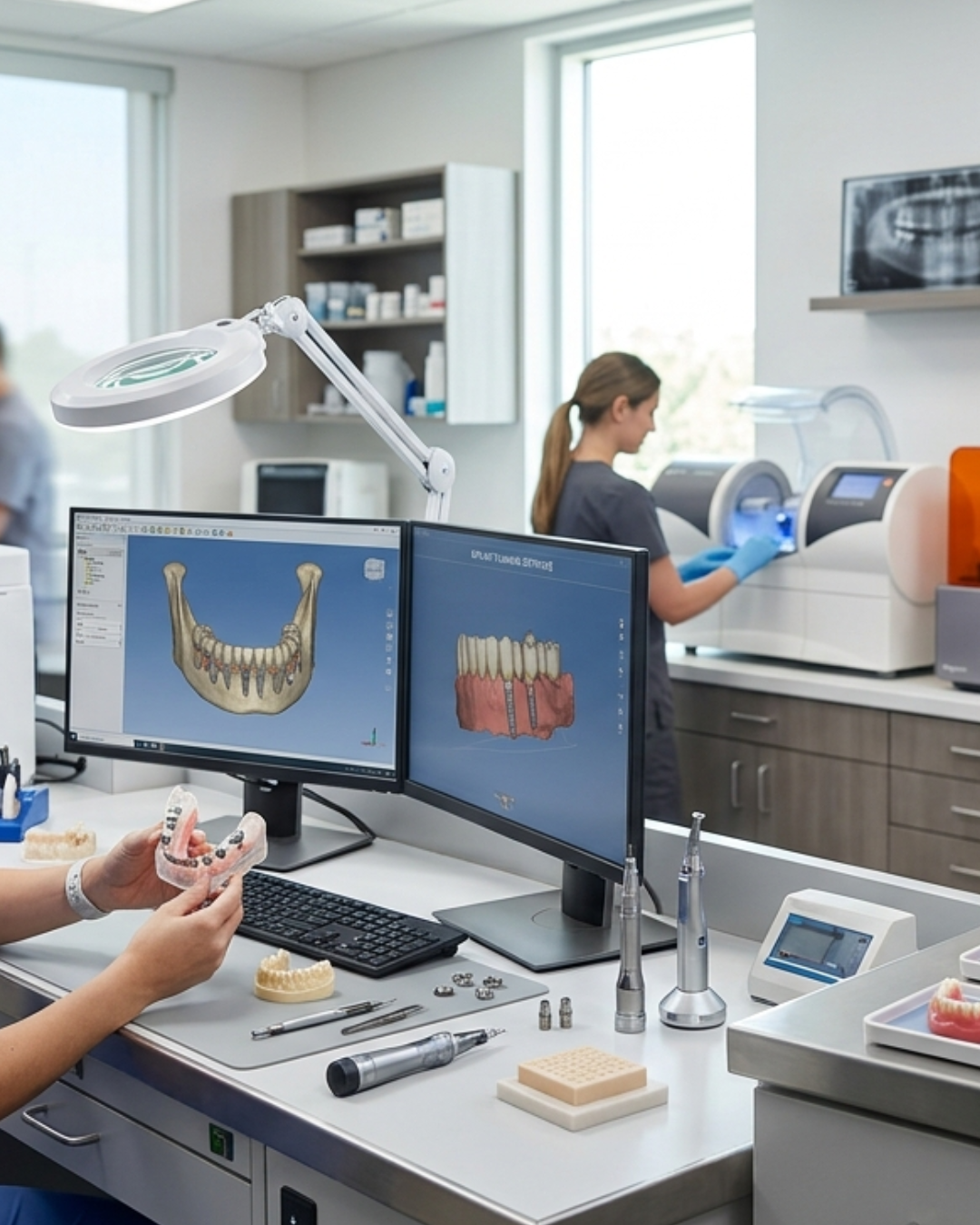
Precision is not about making treatment slower for the sake of it. It is about matching the treatment timeline to your biology, anatomy, and risk profile. A prosthodontic approach includes comprehensive examination, medical and dental history review, diagnostic imaging, periodontal evaluation, bite analysis, digital smile design, surgical planning, laboratory coordination, and maintenance planning.
Problems That Can Arise From Rushed Dentistry
Rushed restorative dentistry can create long-term problems that are difficult, painful, and costly to correct. Common risks include:
Poor Fit & Instability
Dentures delivered too quickly may not account for tissue healing, jawbone changes, or bite refinement. Immediate dentures commonly require extensive follow-up adjustments, relining, or remaking after healing.
Implant Failure
Immediate implant loading requires excellent primary stability. It is a complex surgical and prosthodontic procedure that should only be performed when specific clinical conditions are met, such as intact socket walls and no acute infection.
Peri-Implant Disease
Dental implants are vulnerable to biologic complications. Risk assessment, tailored treatment planning, regular follow-ups, and careful hygiene education are mandatory for long-term implant success.
Mechanical Complications
Implant restorations must fit perfectly to withstand chewing forces. Screw fracture or loosening is often caused by mishandling, prosthetic misfit, and unmanaged occlusal (bite) forces.
Compromised Hygiene
Restorations must be designed so you can clean around them. Inflammation and disease risk skyrockets when rushed prosthetic contours, margins, or poor implant positioning make daily hygiene impossible.
Unrealistic Expectations
A fast result may not be a final result. Patients may wrongly believe they are receiving permanent teeth immediately, when the first restoration is often just part of a staged process requiring further healing and adjustments.
Dental Implants FAQ's
What are dental implants and how do they work?
Dental implants are artificial tooth roots made of titanium that are surgically implanted into the jawbone to support replacement teeth. The implant can support a crown, a bridge, or a denture, restoring a missing tooth or several teeth.
Am I a suitable candidate for dental implants?
Ideal candidates for dental implants are adults with good oral health, sufficient bone density in the jaw, and are in good overall health. Sometimes a bone graft can be done to help those with low bone density.
What is the procedure for getting dental implants?
The procedure for getting dental implants typically involves multiple steps, including consultation, implant placement, healing period, and attachment of artificial teeth.
How long do dental implants last?
With proper care and maintenance, dental implants can last a lifetime.
Do dental implants require special care or maintenance?
Dental implants require regular brushing, flossing, and dental check-ups, similar to natural teeth.
Are dental implants painful?
Discomfort during and after the dental implant procedure is usually managed with local anesthesia and over-the-counter pain medication.
What are the benefits of choosing dental implants over other tooth replacement options?
Benefits of dental implants include improved appearance, speech, comfort, oral health, and durability compared to other tooth replacement options.
What is the cost of getting dental implants?
The cost of dental implants can vary depending on the number of implants needed, additional procedures required, and location.
Are there any risks or potential complications associated with dental implants?
Risks associated with dental implants may include infection, nerve damage, implant failure, or sinus problems.
How soon can I resume normal activities after getting dental implants?
Patients can typically resume normal activities within a few days to a week after getting dental implants, depending on individual healing.
What Our Patients Are Saying
Excellent Communication
"The staff at Atwood Prosthodontics are professional and caring towards each patients' concerns. There is also excellent communication with the doctors and patients, as they are always quick to respond to questions and calls."
Tom D.
Gave Me Back My Smile
"Dr. Atwood has built me a fantastic partial. My case was somewhat difficult and he made sure that it was done correctly, used the best partners to help make it. It's been almost a year and I haven't had one problem at all! He gave me back my smile!"
Cris L.
Choose This Specialist
"If you want implants or restorative dentistry of any kind, see a specialist and choose THIS specialist. This dentist is acclimatized to unusual situations and will work very hard to get the job done perfectly and comfortably, even if you're a tough case."
Pamela A.
